
Inguinal Hernia Surgery Recovery & Scar Management
What is an Inguinal Hernia?
So, what is a hernia, and what are the key differences between a hernia and an inguinal hernia?
In general, a hernia occurs when tissue, often part of the intestine or surrounding tissue, protrudes through a weakened area of the abdominal wall. In the case of an inguinal hernia, the tissue protrudes through the abdominal wall and extends lower into the groin region through the inguinal canal (2).
Inguinal hernias don’t just occur in men; women can develop them as well, although at a significantly lower rate. Studies suggest the lifetime risk of developing an inguinal hernia is approximately 27% for men and 3% for women (5).
What Causes Them and How Do I Know if I Have an Inguinal Hernia?
While the exact cause of an inguinal hernia is not always known, several factors may contribute to its development:
An inherited or congenital weakness in the abdominal wall (a family history of hernias may increase your risk of developing an inguinal hernia).
Ageing, as connective tissue can gradually weaken and become less supportive over time.
Physically demanding work or heavy lifting over many years.
Chronic coughing or repeated straining, such as from constipation.
How Do I Know if I Have an Inguinal Hernia?
Usually, but not always, a lump or bulge may be present on either side of the groin. This may be accompanied by mild to moderate pain or discomfort, which can increase with physical activity (3).
Another common sign or symptom is pain in the lower abdomen or groin when coughing, sneezing, bending, or lifting.
Treatment of Inguinal Hernias
The most common treatment for an inguinal hernia is surgery, either through traditional open surgery or laparoscopic (keyhole) surgery. During the procedure, a supportive surgical mesh is often implanted to help reinforce the weakened area of the abdominal wall. Surgery is generally considered a safe and effective treatment option for most people (2).
Post-Surgery Care
Recovery from inguinal hernia surgery takes time, and everyone’s healing journey is a little different. In the first few days, rest is important, but gentle movement around the home is often encouraged to help support circulation.
Over the next few weeks, many people slowly return to everyday activities such as walking, shopping, and light household tasks. As healing progresses, exercise and activity levels can gradually increase.
By around six weeks, many people are able to return to most of their normal activities, although recovery time can vary depending on the individual and the type of surgery performed. Following your surgeon’s advice and listening to your body are important parts of the recovery process (6).
From around six weeks onwards, and with approval from your surgeon and/or GP, gentle remedial and/or therapeutic massage may be introduced to support recovery. Massage therapy may assist with comfort, mobility, and feelings of tightness or restriction around the affected area.
How Massage Therapy May Help Post-Surgery Recovery
Scar tissue forms as a normal and important part of the healing process following surgery. As the body repairs itself, scar tissue develops both externally (the visible scar) and internally within the surrounding tissues. Over time, these tissues can become less flexible, which may contribute to feelings of tightness, discomfort, reduced mobility, or a pulling sensation around the surgical site (8).
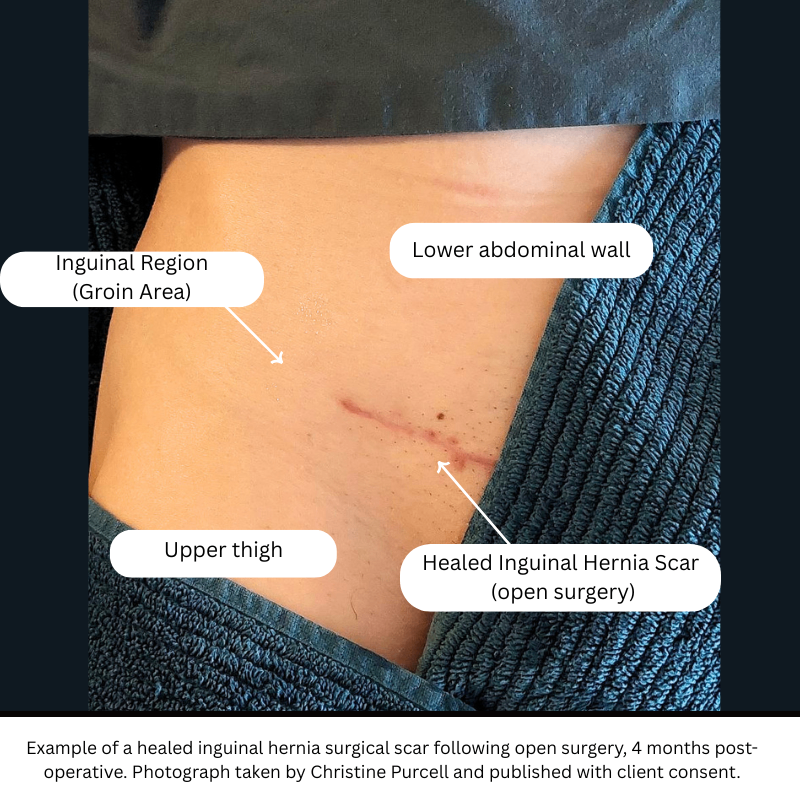
Because scar tissue can affect the movement of nearby muscles, fascia, and other soft tissues, some people notice restrictions in movement or changes in the way they move following surgery (7). These effects can vary from person to person and may depend on factors such as the type of surgery performed, individual healing rates, and activity levels during recovery.
Research suggests that appropriate scar management and soft tissue therapy may help improve tissue mobility, reduce feelings of tightness and discomfort, and support healthy movement and function during recovery and beyond (4).
Furthermore, studies suggest that massage therapy may influence the autonomic nervous system by promoting parasympathetic nervous system (PNS) activity, often referred to as the body’s “rest and digest” state (1). Increased parasympathetic activity is associated with relaxation and may support recovery processes by reducing stress, improving sleep quality, and enhancing overall wellbeing. While massage therapy should not be considered a treatment for surgical recovery itself, it may serve as a valuable complementary therapy to support comfort, relaxation, and functional recovery following surgery.
Common Areas Affected Post-Surgery
This depends on the individual. Many factors need to be considered, including the person’s age, the condition of the muscles and surrounding tissues prior to surgery (for example, whether the person was physically fit and mobile before the procedure), and lifestyle factors.
For some individuals, muscle and tissue tightness or restriction may be present for several weeks or even months following surgery. Commonly affected areas include the lower abdominal wall, hip region, upper thigh, and the scar itself.
This may have a flow-on effect, contributing to altered gait patterns (changes in walking), muscular guarding (protective tension due to fear of hurting the surgical site), and compensatory movement patterns. These responses are common, interconnected, and often involuntary as the body adapts and protects the surgical region during the healing process.
The Sensitive Nature of Treatment
Because of the sensitive nature of this area, it is important to find a qualified massage therapist who is comfortable working respectfully and effectively around the inguinal region. Professional draping and towelling techniques are always used to ensure client comfort, privacy, and safety.
Communication and informed consent are essential throughout treatment to ensure the comfort and wellbeing of both the client and practitioner.
Final Thoughts
Post-surgery and beyond, movement is key to a healthy and effective recovery. It is important to begin with gentle movement and stretching, gradually easing yourself back into your normal activities as advised by your healthcare team. Avoid moderate to heavy lifting during the first six weeks following surgery, and when returning to normal activities, remain mindful of what and how you are lifting.
If you are experiencing pain, restricted movement, or tightness around the scar or surrounding tissues, scar management, massage therapy, and mobility work may help improve comfort and movement during recovery and beyond.
Reference List
(1) Diego, M. A., & Field, T. (2009). Moderate Pressure Massage Elicits a Parasympathetic Nervous System Response. International Journal of Neuroscience, 119(5), 630–638. https://doi.org/10.1080/00207450802329605
(2) Hassler KR, Saxena P, Baltazar-Ford KS. Open Inguinal Hernia Repair. [Updated 2022 Sep 12]. In: StatPearls [Internet]. Treasure Island (FL): StatPearls Publishing; 2026 Jan-. Available from: https://www.ncbi.nlm.nih.gov/books/NBK459309/
(3) Jenkins JT, O’Dwyer PJ. Inguinal hernias. BMJ. 2008 Feb 2;336(7638):269-72. doi: 10.1136/bmj.39450.428275.AD. PMID: 18244999; PMCID: PMC2223000.
(4) Kelly RC, Armstrong M, Bensky A, Foti A, Wasserman JB. Soft tissue mobilization techniques in treating chronic abdominal scar tissue: A quasi-experimental single subject design. J Bodyw Mov Ther. 2019 Oct;23(4):805-814. doi: 10.1016/j.jbmt.2019.04.010. Epub 2019 Jun 4. PMID: 31733765.
(5) Öberg S, Andresen K, Rosenberg J. Etiology of Inguinal Hernias: A Comprehensive Review. Front Surg. 2017 Sep 22;4:52. doi: 10.3389/fsurg.2017.00052. PMID: 29018803; PMCID: PMC5614933.
(6) Ramsay Health Care. Dos and Don’ts After Inguinal Hernia Surgery. Available from: https://www.ramsayhealth.co.uk/blog/general-surgery/dos-and-donts-after-inguinal-hernia-surgery
(7) The Hernia Clinic. Scar Tissue Minimisation. Available from: https://theherniaclinic.co.uk/scar-tissue-minimisation/
(8) Telford STT School. Scar Massage: Evidence, Mechanisms and Clinical Reasoning. Available from: https://www.telfordsttschool.com/post/scar-massage-evidence-mechanisms-and-clinical-reasoning